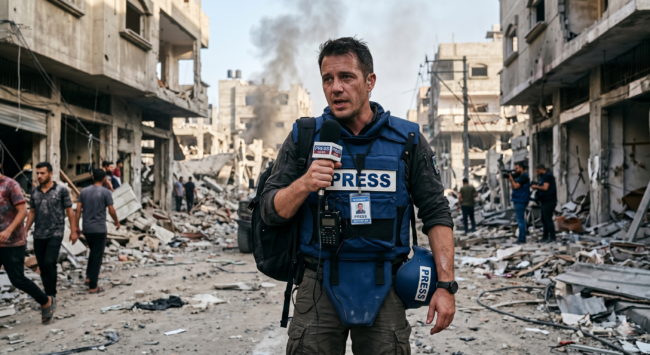
EXPLAINED | MOSTLY FALSE: “Eighty-five percent of the crimes committed against journalists go uninvestigated and unpunished: an unacceptable level of impunity.”

In a speech released by the United Nations, the Secretary-General António Guterres made a mostly false statement on May 3, 2026, for Press Freedom Day. “Eighty-five percent of the crimes committed against journalists go uninvestigated and unpunished: an unacceptable level of impunity,” he stated. Why is the percentage of crimes against journalists difficult to measure?…

Finding Truth in a Sea of Definitions: An Erasmus Tourism Student’s Journey into Fact-Checking

When I packed my bags for my Erasmus+ semester in Wilhelmshaven, I expected to explore German culture, and meet people from across Europe. I did not expect to find myself in a high-stakes, fast-paced journalism newsroom, debating the legal definitions of “crime” versus “killing” with a team of media professionals. As a tourism management student,…

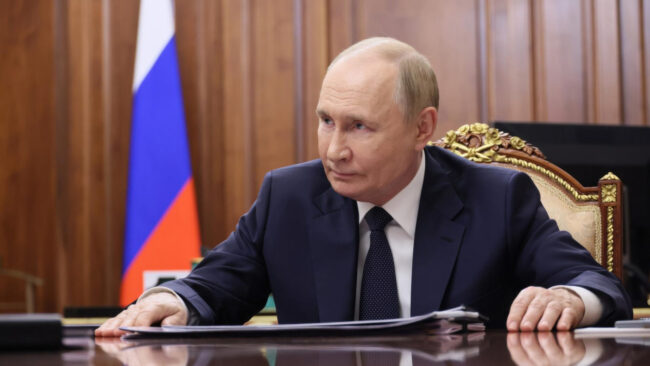
Wladimir Putin, the president of Russia, sitting behind a big desk.

Dangerous Footprints: The Unexpected High Stakes of Student Fact-Checking

A university seminar room, cross-referencing data, verifying sources, this is how most people imagine the craft of fact-checking during their studies. However, during our international “EUFactChecking” lab, we quickly realized that research can take on very real, highly sensitive, and geopolitical dimensions. It is an experience that taught us about the fact-checking process itself, the…

Misinformation is a mistake; disinformation is a strategy. But both can do equal harm once they’re believed

Misinformation and disinformation aren’t new phenomena in our society, but in this digital age, they’ve become nearly impossible to escape. Every day, on every social media platform, fake news stories circulate faster than fact-checkers can debunk them. One viral post might claim that Starbucks sponsored a controversial political convention, while another spreads gossip about a…

The price of truth

Fake news has always existed, but with the rise of the Internet and social media, it spreads today more quickly and widely than ever. For this reason, fact-checking — the verification of the accuracy of statements, declarations, images or news — has become more and more central in the modern information landscape. However, fact-checking can…

Fact-checking can expose misinformation, but it rarely changes the minds of those already convinced

In the digital age, truth travels slower than rumor. Fact-checking initiatives can expose misinformation, but they face an unexpected obstacle: those who already believe the falsehoods rarely change their minds. Why doesn’t evidence always win over conviction? The contemporary information environment has transformed the way societies understand truth. While digital platforms have made access to…