
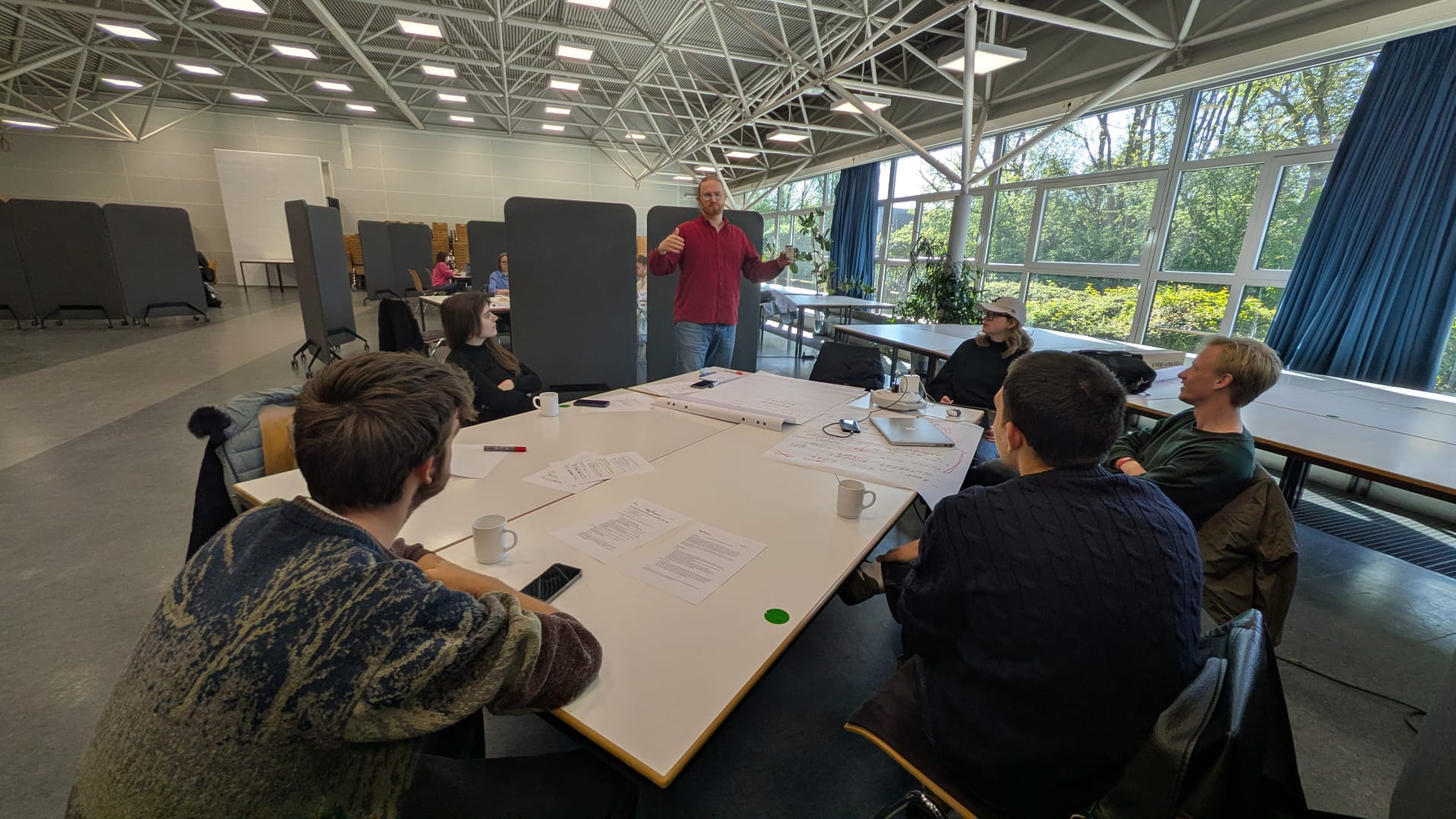
When I packed my bags for my Erasmus+ semester in Wilhelmshaven, I expected to explore German culture, and meet people from across Europe. I did not expect to find myself in a high-stakes, fast-paced journalism newsroom, debating the legal definitions of “crime” versus “killing” with a team of media professionals. As a tourism management student, stepping into the world of proactive journalism was entirely accidental—and completely overwhelming. Yet, looking back at this intense week, it was easily one of the most eye-opening experiences of my studies. Here is what happens when an outsider gets a crash course in the crucial, demanding, and deeply necessary world of fact-checking.
Overcoming the First Hurdle: The Shared Topic
The intensity started before our research even began. We chose to investigate a statement made by UN Secretary-General António Guterres regarding international safety and statistics. The twist? Another student group had selected the exact same statement.
Neither team wanted to back down from the challenge. In a true spirit of collaboration, we decided to split the workload right down the middle. Both groups tackled the statement from different angles, ensuring a thorough investigation without wasting valuable resources. It was a lesson in diplomacy before the journalism had even started.
Feeling Like a Burden—And Finding My Footing
I will be honest: during the first couple of days, I felt like a total burden. My teammates were experienced journalism students who inherently understood how to track down sources, analyze data, and spot media bias. I, on the other hand, didn’t have a clue where to start.
But journalism, as I quickly learned, relies heavily on human relationships and mutual support. My multinational team didn’t leave me behind; they lifted me up. With their guidance, I found my specific role in the machine and was able to bring my own contribution to the table.
My primary task was navigating a linguistic minefield. We had to break down exactly what Guterres meant, which became incredibly complicated because terms like “killing” and “crime” were being used interchangeably across different reports. In the world of fact-checking, those two words carry entirely different weights.
I spent hours defining and untangling terms like:
- Impunity
- Crime
- Unpunished
- Uninvestigated
To make matters more challenging, much of the data we needed existed only for a certain number of countries, and many of the statistics had not been recently updated. We even had to contact UNESCO directly to secure primary sources.
The Verdict: Mostly False
After days of relentless digging, cross-referencing definitions, and chasing elusive data, we finally reached our conclusion: the statement was Mostly False.
Discovering that a high-profile public figure’s statement doesn’t hold up under scrutiny is a strange feeling. It brought a mix of surprise and indignation. It made me realize just how fragile public information can be, and how easy it is for a misleading statistic to be accepted as absolute truth if no one takes the time to verify it.
A New Perspective on Journalism
This class was perfectly organized, balancing rigorous academic work with genuine human connection. I met incredible people from all over Europe who are fiercely passionate about their field. Hearing them explain the specific journalistic challenges and political pressures in their respective home countries gave me a completely new perspective on global media.
Before this week, I took the news for granted. Now, I see how hard, complex, and vital a journalist’s job is for the general well-being of society. They are the gatekeepers of truth.
To any student—whether you study journalism, tourism, or engineering—if you ever get the chance to participate in an EUfactcheck class, take it. The theoretical knowledge, practical skills, and lifelong friendships you gain are worth every single overwhelming moment.
RESEARCH | ARTICLE © Otari Tvaliashvili, Jade University of Applied Sciences Wilhelmshaven, Germany.
Leave your comments, thoughts and suggestions in the box below. Take note: your response is moderated.
Read the Factcheck to this Blogpost.