EUfactcheck 2.0

In May 2024 the EUfactcheck programme successfully factchecked the EU elections for the second time. From academic year 2024-205 onwards the EUfactcheck programme will offer two different ‘tracks’ for EJTA member schools to participate.
* Individual schools can still use the EUfactcheck website as a platform to publish their students’ factchecks. This can be done at any convenient moment throughout the year, that fits the curriculum of the study programme. Please contact the EUfactcheck editorial team.
* Each year another EJTA member school will organise an intensive factchecking week, the EUfactcheck Lab, funded by Erasmus short mobility. Other EJTA member schools are welcome to join with up to 6 students and one teacher (Erasmus Blended Intensive Programme). Please contact the EUfactcheck programme manager for more details. In 2024 the EUfactcheck Lab covered the EU elections, hosted by EJTA member Hogeschool Utrecht, the Netherlands. The next year EJTA member Universitat Autonoma Barcelona in Spain offered the EUfactcheck Lab on ‘Climate Change’. In 2026 the topic is Press Freedom. In the first week of May students from 7 EJTA schools meet at Jade University in Wilhelmshaven.

EUfactcheck, an initiative of the European Journalism Training Association (EJTA) fights mis- and disinformation about policies and topics in Europe. Journalism students from all over Europe factcheck claims and statements made by politicians and others public figures, and rate them as true or false. Our focus is to give correct information and context to the reader.

Latest fact-checks

fact checking

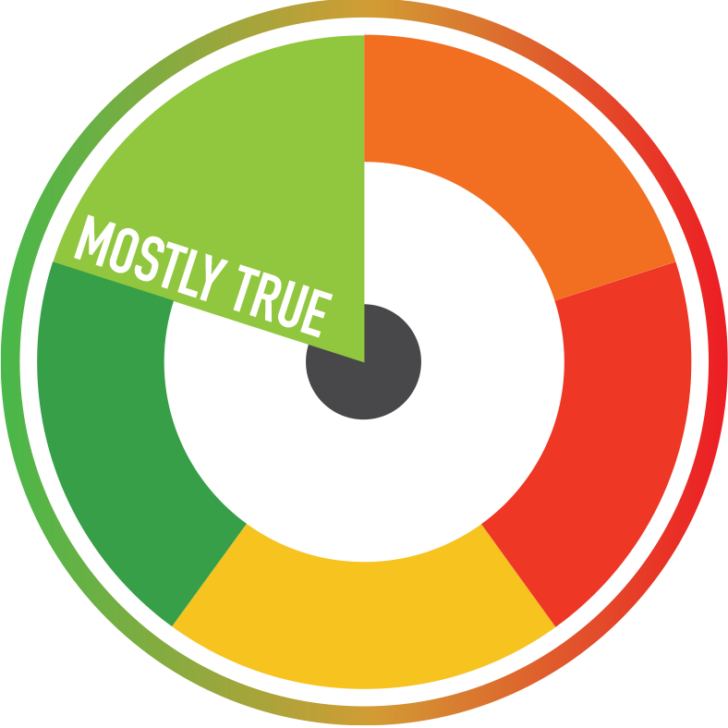
Mostly false: “Catalan public media lacks objectivity and pluralism”

In recent years, public media in Spain have been questioned because they are commonly accused of serving particular political tendencies. In the case of the Catalan public broadcasting, the claim arrived to the Committee on Petitions of the European Parliament in January 2019. Two complainants accused the Catalan public television (TV3) and radio station (Catalunya…

Read more

Mostly true: “More Dutch weed farms in foreign countries”

On the 3rd of February 2019, several newspapers including Metro reported that more weed farms with Dutch characteristics were being discovered in countries across Europe. The articles were written due to the report from the investigative journalism programme Reporter Radio on Dutch radio station NPO Radio 1. The claim seems to be mostly true. In…

Read more

Mostly true: “Kosovo’s import tariffs are a clear violation of CEFTA”

The Dutch newspaper Trouw published an article on February 1st about import tariffs of 100 percent on Serbian products like milk. According to Trouw, this is problematic, since the imposed tariffs are – according to the EU – a direct violation of the regional Central European Free Trade Agreement (CEFTA). Our findings suggest this is…

Read more
fact-check uncheckable

Uncheckable: “Conventional menstrual pads are made up of 90% plastic materials”

The Natracare brand of organic skin protection claims on its website that conventional menstrual pads are made of “90% plastic”. An unverifiable figure, but likely.   “Did you know conventional menstrual pads are made up of 90% plastic materials?!” The brand Natracare, a pioneer in organic sanitary pads, uses this astounding figure to appeal to…

Read more

Mostly true: “The way Facebook works is simple: the more money you spend, the wider your audience”

During elections, some candidates buy advertisements on Facebook to increase the visibility of their posts. Some see this as necessary to gain the upper hand in an election. In an election period, do wealthy candidates have an advantage thanks to Facebook? “The way Facebook works is simple: the more money you spend, the wider your…

Read more

Latest blog posts

European Journalism Training Association EJTA
Council of Europe
evens foundation
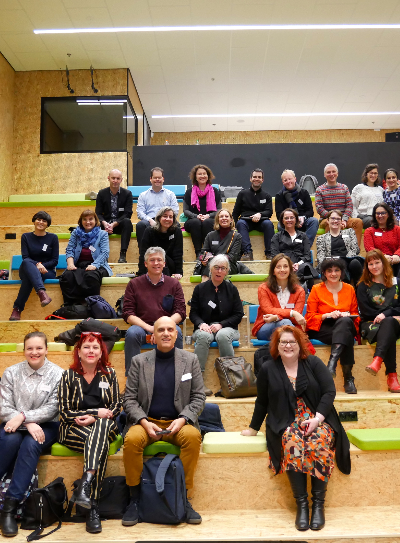
Group photo EUFACTCHECK 240119

The EUFACTCHECK project

EUFACTCHECK is the fact-checking project of the European Journalism Training Association (EJTA) that intends to build a sustainable curriculum unit on fact-checking within a European network of Journalism schools.

Through fact-checking European political claims and trying to tackle misinformation, we want our students and our public to grow a deeper insight and interest in democratic processes, both on national and European level.

EUFACTCHECK wishes to motivate fact-based debate in the EU and to stimulate media and information literacy.

Our history

After the success of the students’ publications, the participants of EJTA’s fact-checking project EUFACTCHECK decided at the EJTA AGM in Paris (July 2019) to move on with the project and to take new steps in the academic year 2019-2020.

By January-February 2019 a manual with guidelines and tips & tricks was published. In February 2020 a second Bootcamp will be organised in Ljubljana, with financial help from the Evens Foundation. This Train the Trainer focused on Central Eastern European countries, some new schools joined this project.
During corona the EJTA-schools continued to verify claims and publish fact checks. Now we are looking ahead to the 2024 EU elections.

For information about the EUfactcheck project please contact the programme manager: carien.touwen@hu.nl 

Read more