
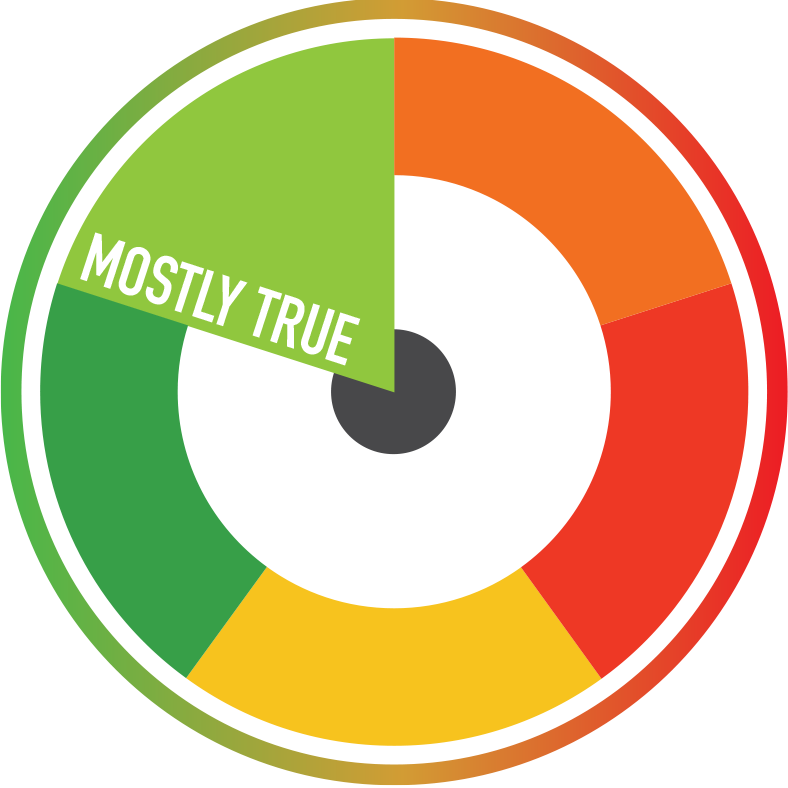
On Wednesday 28 January 2026, during the plenary session of the Flemish Parliament, MP Mieke Schauvliege (Groen) stated that Flemish rivers are the dirtiest rivers in Europe. According to Schauvliege, Flanders is facing a “gigantic PFAS problem that is making drinking water way too expensive.” Speaking on behalf of the Flemish green party Groen, she argued that Minister-President Matthias Diependaele (N-VA) and his government are currently failing to sufficiently respect environmental regulations.
Mieke Schauvliege was elected to the Flemish Parliament in 2019 and is now the parliamentary group leader for Groen. With a background in the environmental and nature sector, she frequently raises related issues in her political work, such as PFAS contamination in Flemish rivers.
According to Schauvliege, the current Flemish Minister for Environment and Agriculture, Jo Brouns (CD&V), should fight harder for a healthy living environment in Flanders. “At the moment, the Minister for the Environment is more like a minister against the environment. And that must change, because nowhere in Europe are rivers as polluted as in Flanders”, Schauvliege claims.
What is “dirty”?
Both Flemish Environment Agency (VMM) and Research Institute for Nature and Forest (INBO) refer to the European Water Framework Directive (WFD). This directive does not assess water quality on a simple “clean/dirty” scale, but on a combination of biological quality, chemical quality, and hydromorphology. Biological quality concerns the life of aquatic animals and plants; chemical quality concerns the presence of pollutants such as heavy metals or pesticides; and hydromorphology concerns how strongly a watercourse has been modified (canalised, embanked, etc.).
The WFD uses the categories “bad,” “poor,” “moderate,” “good,” and “high” status. Member states must report how many of their water bodies achieve “good status.” That is the basis for European comparisons. “Dirtiest rivers” is therefore not an official category. It is a political or rhetorical translation of a poor ecological status.
Other regions
The VMM states that water quality in Flanders has improved significantly thanks to investments in sewage systems, water treatment, and policy measures. At the same time, the current situation remains problematic. According to the VMM, this has several causes. First, Flanders is a small, densely populated region with few large rivers. There is also extensive agriculture and industry, which increases pressure on water quality.
Despite improvements over recent decades, only one water body in Flanders currently meets the “good status” required by the WFD. This score indeed places Flanders in the tail end of EU regions in terms of water quality.
However, the VMM adds an important nuance: regions comparable to Flanders show similar results. It is therefore not the case that Belgian rivers are the dirtiest in Europe. It is true that there is still a great deal of work to be done to improve water quality. In other words: Flanders scores poorly, but not uniquely poorly — something Schauvliege’s statement does somewhat suggest. Other regions within the EU show a similar lag.
Flattening curve
INBO explicitly refers to comparative studies by the European Environment Agency (EEA), which compile WFD reporting from member states. These studies show that Flanders belongs “to the regions with the least favourable ecological status” for rivers. This leads to the same conclusion as the VMM: Flanders is not the single worst performer, but part of the group with the poorest water quality.
INBO also refers to an older European study in which one Belgian monitoring site recorded the highest pesticide concentrations of all sampled locations. This is serious, but it concerns a limited number of monitoring points, not a complete picture of all Flemish or European rivers. It is therefore a warning sign, but not conclusive evidence that “Flanders has the dirtiest rivers in Europe.”
INBO identifies similar causes for river pollution as the VMM, such as agriculture and industry. But INBO adds that Flanders is historically more burdened with pollution in riverbeds than many other European regions. INBO also points to a worrying trend: while water quality improved for many years, there has been little progress over the past fifteen years. The curve is flattening, while the targets for cleaner water are still far from being met.
European perspective
EEA reports on the ecological status of surface waters show that, on average, less than half of European water bodies achieve good or high status. Flanders clearly scores below that average: only one water body meets the standard, as VMM indicates. Flanders therefore belongs to the worst-performing regions.
However, the EEA warns that comparisons between countries must be made cautiously, as monitoring methods, water body classifications, and historical pressures differ.

Conclusion
Based on information from VMM, INBO, and the EEA, one main caveat applies to Mieke Schauvliege’s statement: the claim lacks nuance and suggests that Flemish rivers are uniquely the dirtiest in all of Europe. That is not necessarily true. Within the EU — not the whole of Europe — Flanders does indeed belong to the group of regions with the poorest ecological river status. This means that within that group, other regions score equally poorly or perhaps even worse.
In times of social media, where bold statements tend to perform well, it is understandable that Schauvliege opts for the catchy “Flemish rivers are the dirtiest in Europe.” But to remain fully accurate, she would do better to say next time: “Flemish rivers are among the EU water bodies with the poorest ecological status according to EU standards.”
RESEARCH | ARTICLE © Lilly Arnouts, Joke Daems and Frederieke Verseput, AP University of Applied Sciences Antwerp, Belgium.
Leave your comments, thoughts and suggestions in the box below. Take note: your response is moderated.