
According to the annually published World Press Freedom Index by Reporters Without Borders (RSF), the state of global press freedom is worse than at any point in the index’s 25-year history. More than half of the world’s countries are now classified as “difficult” or “very serious” for press freedom. Several European countries, including Germany, have also fallen in the ranking. Germany ranked 10th in 2024, but dropped to 14th in 2026. Nevertheless, on 28 November 2024, the former German Foreign Minister , Annalena Baerbock, claimed that there were no restrictions on press freedom in Germany or in Europe.
Baerbock’s statement was a reaction to Russia’s decision to expel two employees of the German public broadcaster ARD, a correspondent and a technician. Moscow described the move as retaliation for Germany’s alleged expulsion of four Russian state television journalists and the supposed closure of the Channel One office in Berlin.
Speaking on behalf of the German government, Baerbock dismissed the Russian claims. During a television interview, she said: “Es ist schlicht falsch, dass wir in Deutschland oder in Europa eine Einschränkung der Pressefreiheit haben”, which translates to: “It is simply false that we have restrictions on press freedom in Germany or in Europe”. The statement was repeatedly quoted across several media outlets, such as Tagesschau, ZDFheute, Die ZEIT and Focus.
What does she mean?
“Germany and the European Union are not comparable with Russia, where censorship, arbitrary arrests or systematic state control are commonly used to control the media”, said Katharina Viktoria Weiß, Public Relations Officer from Reporters Without Borders. Additionally, Dr. Christoph Rosenthal, Head of Central Affairs at the ARD General Secretariat Berlin, and a former journalist, similarly emphasised that the political context is essential when assessing the accuracy of the statement.
The claim by the former Foreign Minister should be understood in response to accusations by Russian authorities. Cara Räker, who monitors press freedom violations in Germany as part of the Media Freedom Rapid Response project at the European Centre for Press and Media Freedom, argues that the claim must be understood within the broader context of Russia’s foreign policy towards Germany and the European Union.
As Ms Baerbock is currently working for the United Nations in New York, we were unable to obtain a comment regarding her remarks. Therefore, an interpretation of what she meant by “Europe” in her statement follows. Given the political context and the comparison with Russia’s media environment, it is reasonable to conclude that Ms. Baerbock was referring to the European continent, excluding Russia.
How can restrictions on press freedom be defined?
The Media Freedom Rapid Response (MFRR), which monitors press and media freedom violations, defines restrictions broadly. Journalists in Europe face threats and intimidation, editorial interference, spoofing attacks, blocked access to information, deletion of footage, blocked distribution of journalistic content, physical attacks, legal pressure and online harassment.
Dr. Rosenthal also pointed to structural forms of restriction. He said: “I wouldn’t say that the whole of Europe has 100% press freedom.” He mentioned the need for transparency laws that allow journalists easier access to government documents, as well as sufficient funding for local media and public broadcasters.
Press freedom in Europe
The statement was made at the end of 2024, but the state of press freedom has not improved in Europe since then.
According to the MFRR, 1,548 press freedom violations were documented across Europe in 2024, affecting 2,567 media-related individuals and organisations in 35 countries. Within the 27 EU Member States, Mapping Media Freedom recorded 942 alerts affecting 1,446 journalists, media workers, outlets and other media-related entities.
The incidents included obstruction of journalistic work, physical attacks, etc. Private individuals were the main perpetrators, although cases involving government representatives and public officials remain particularly worrying. Online attacks increased again and became the most common form of violation, followed by incidents during protests.
The RSF 2026 index, paints a similar picture. While several European countries remain among the world’s highest-ranked nations for press freedom, a number of states recorded declines. In Spain, the organisation reported that media pluralism had been weakened by publication closures, job losses and pressure on regional and local outlets. Hungary also continues to face criticism over political influence on public media.
Nevertheless, Europe’s media environment remains fundamentally different from Russia’s. In the 2026 RSF index, Russia ranked 172nd out of 180 countries, reflecting extensive censorship, severe restrictions on independent journalism and strong state control over the media. The evidence therefore suggests that while European journalists continue to face political, economic and security-related pressures, these challenges are not comparable to the systemic restrictions found in Russia.
The state of press freedom in Germany
As former German Foreign Minister Annalena Baerbock claimed, Press freedom in Germany is strong, but not absolute. Dr. Rosenthal said that “press freedom in Germany is not 100%, but anyway, we have a high level.” Weiß from RSF similarly stated that journalists in Germany can generally work freely, but that “it would not be accurate to say that there are no restrictions or threats to press freedom in Germany or Europe.”
In 2024, two journalists covering climate protests at Cologne-Bonn airport were detained by federal police for several hours despite identifying themselves as press. Investigative journalist, Arne Semsrott, also faced criminal proceedings after publishing leaked court documents, in a case criticised by press freedom advocates concerned about restrictions on reporting in the public interest. Germany has additionally faced debate over surveillance measures linked to climate activism, including wiretaps on the “Last Generation” group.
Although the interviewed experts described press freedom in Germany as strong overall, they also emphasised that it is not absolute. Dr. Rosenthal said he had “never experienced any restrictions from the government in Germany,” but added that “there is also room for improvement”, especially regarding transparency regulation and funding for local press and public broadcasters.
Assessing the claim
Baerbock’s statement suggests that press freedom restrictions do not exist in Germany or Europe. Based on the reports, cases and expert assessments quoted in this article, this is not accurate. Journalists in Europe continue to face restrictions on press freedom and freedom of expression. According to the MFRR, 1,548 press freedom violations were documented across Europe in 2024 alone.
As Räker from MFRR notes: “while Germany and many countries in the European Union still have relatively strong protections for press freedom, there are clearly ongoing/growing pressures and restrictions that should not be ignored.”
However, the claim cannot be assessed in isolation. Räker argues that Baerbock’s statement was not intended as a general assessment of press freedom in Germany or Europe. “Framing it as such would not be correct,” she said. Given the political context, it is therefore unlikely that Baerbock meant to make a broad, simplified statement about press freedom, but rather responded specifically to Russian accusations.
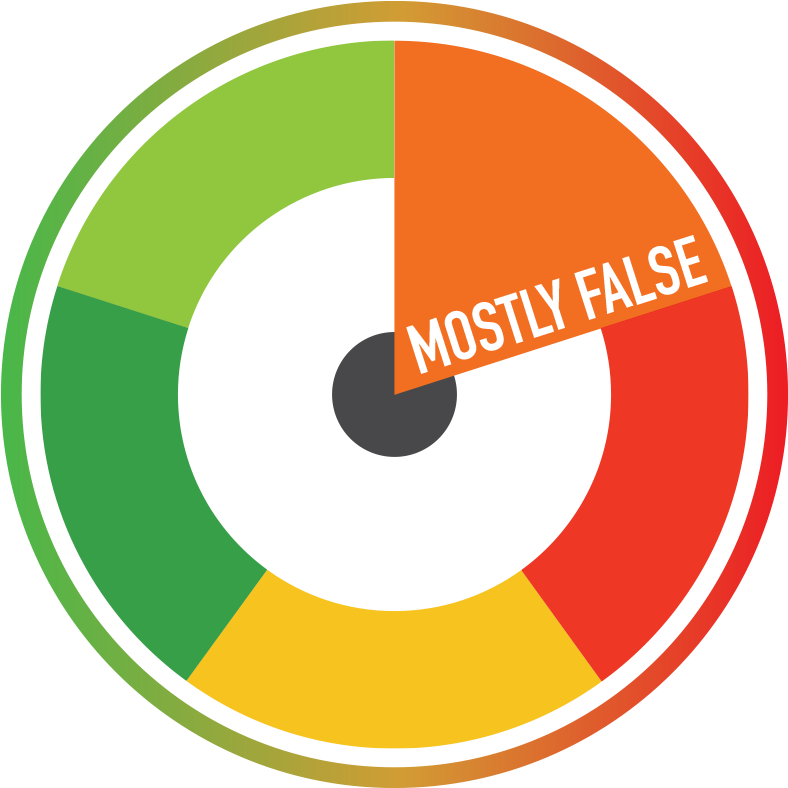
Conclusion: mostly false
Annalena Baerbock’s statement has to be considered mostly false. Germany and Europe maintain significantly higher levels of press freedom than Russia, and the context of Russian retaliation and propaganda is important. However, it is inaccurate to claim that restrictions on press freedom do not exist at all. The evidence shows that press freedom in Germany and Europe is strong, but not absolute.
RESEARCH | ARTICLE © Blai Corpas, Anna Tishchenko, Alina Ennen, Maria Antonenko, Riina Niinisaari, Tamar Tchialashvili
Leave your comments, thoughts and suggestions in the box below. Take note: your response is moderated.

