EUfactcheck in 2024-2025

In May 2024 the EUfactcheck programme successfully factchecked the EU elections for the second time.  From academic year 2024-205 onwards the EUfactcheck programme will offer two different ‘tracks’ for EJTA member schools to participate.
* Individual schools can still use the EUfactcheck website as a platform to publish their students’ factchecks. This can be done at any convenient moment throughout the year, that fits the curriculum of the study programme. Please contact the EUfactcheck editorial team.
* Each year another EJTA member school will organise an intensive factchecking week, the EUfactcheck Lab, funded by Erasmus short mobility. Other EJTA member schools are welcome to join with up to 6 students and one teacher (Erasmus Blended Intensive Programme). Please contact the EUfactcheck programme manager for more details. In 2024 the EUfactcheck Lab covered the EU elections, in 2025 the topic is ‘Climate Reporting’.

EUfactcheck, an initiative of the European Journalism Training Association (EJTA) fights mis- and disinformation about European policies and topics. Journalism students from all over Europe factcheck claims and statements made by politicians and others and rate them. Our focus is not to debunk fake news but to give correct information to the reader.

Latest fact-checks

False: Romania barring Călin Georgescu from running in the presidential election is unprecedented and undemocratic

Christine Anderson, a member of the Europe of Sovereign Nations Group, claimed in a Strasbourg plenary session at the European Parliament, that Romania barring Călin Georgescu from running in the presidential election is unprecedented and undemocratic. This statement is false. “Romania has now barred Călin Georgescu, as my colleague Mr Piperea just pointed out. This…

Read more

Mostly true: “Germany will be climate-neutral by 2045”

On January 18, 2023, German Chancellor Olaf Scholz announced at the World Economic Forum in Davos that Germany aims to become one of the first industrialized nations to achieve climate neutrality by 2045. This statement is mostly true. Legal Framework and National Targets The Climate Change Act (KSG) enshrines the goal of climate neutrality by 2045. It stipulates…

Read more

False: “Ms. Weidel does not represent far-right positions but rather conservative and economically liberal ones”

On 24 February 2024, an interview with Sahra Wagenknecht, chairwoman of the Bündnis Sahra Wagenknecht party, appeared in the Frankfurter Allgemeine Zeitung (FAZ). FAZ is a German newspaper. In this interview, Wagenknecht stated: “Ms. Weidel does not represent far-right positions but rather conservative and economically liberal ones.” This statement turned out to be false. This fact-check focuses on the first part…

Read more

Mostly True: “Germany distributes money all over the world, but has none left for hardworking farmers”

Martin Huber, Secretary General of the Christian Social Union (CSU), criticized the priorities of the German government coalition (“Ampel-Koalition”) in a post on X, claiming that the government invests substantial funds in global development projects while failing to support German farmers. While his statement is mostly accurate, some contextual clarifications are necessary. On January 19,…

Read more

Mostly true: “We are now attracting more investments in clean hydrogen than the US and China combined”

On September 13, 2023, Ursula von der Leyen, President of the European Commission, stated during her State of the Union address that the European Union (EU) is attracting more investments in clean hydrogen than the US and China combined. This statement aligns with the context of the European Green Deal and the ambitious goal of establishing the…

Read more
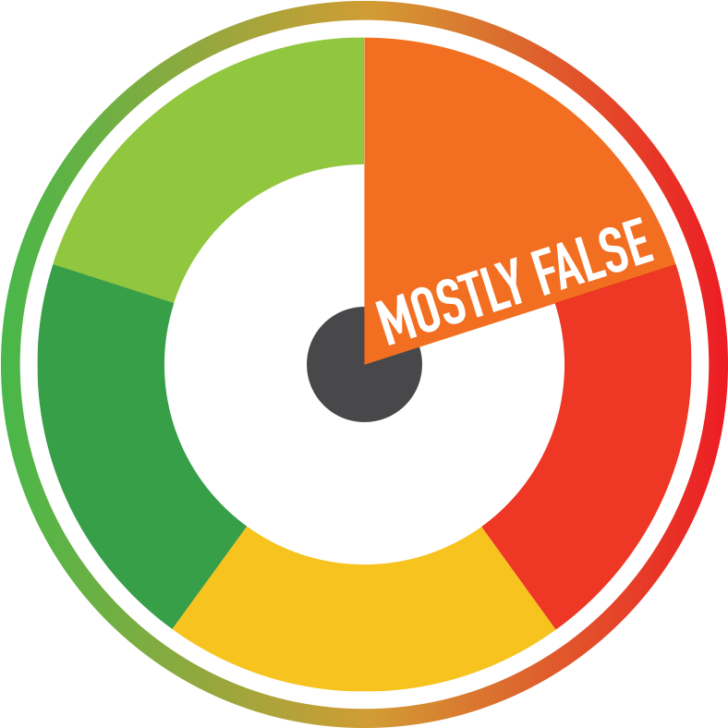
mostly false

Mostly false: “Most of the recipients of citizen’s benefit are able to work”

Friedrich Merz, federal chairman and chancellor candidate of the Christian Democratic Union (CDU) said in an ARD television interview that most of the recipients of citizen’s benefit are able to work. This statement is mostly false. “We have got 5.5 – 5.6 million citizen’s benefit recipients in Germany, around 4 millions of whom are able…

Read more
mostly false

Mostly False: “It’s still possible to reduce emissions so that we can meet the 1.5 degree target”

“It is still possible for us to reduce emissions in this decade to such an extent that we can meet the 1.5 degree target.” That is how Olaf Scholz began his speech at the COP28 UN Climate Change Conference. He also mentioned the technologies that are available to help us achieve it. A look at the facts…

Read more

Mostly true: “By 2035, there will be no job that is unrelated to AI”

In April 2023, Hubertus Heil, Germany’s Federal Minister for Labor and Social Affairs, stated: “By 2035, there will be no job that is unrelated to AI.” According to him, AI will influence all fields of work in the future — whether by automating routine tasks or assisting with complex processes. Upon review, it becomes evident…

Read more
mostly false

Mostly False: “The FIFA World Cup was definitely a catalyst for positive change in the country“

It has now been two years since the World Cup in Qatar. Gianni Infantino, FIFA President, claimed that the 2022 World Cup had changed positively for the workers. He says that the workers have much better conditions after the World Cup and that the World itself was the catalyst. This claim was checked, and it…

Read more

Latest blog posts

Media analysis: The journalistic treatment of eco-anxiety in the Spanish, British and French press

Although the term ‘eco-anxiety’ already existed before, it has gained significant presence in European media over the past few years. We have examined La Vanguardia (Spain), The Guardian (UK) and Le Monde (France) to see how three prestigious newspapers from different countries address this phenomenon. In all cases, we present a quantitative and qualitative analysis.…

Read more

Blog: Fact-checking a climate change-related claim in the Spanish local elections campaign

Former Barcelona mayor Xavier Trias stated in an interview that “cars are related to pollution, but have nothing to do with climate change”. We decided to check it through different scientific reports. To analyse the claim, it was also necessary to consider the political context and to put Trias’ statement into relation to some recent…

Read more

Blog: Media and the pitfalls of a political dog whistle

Jarosław Kaczyński, former prime minister of Poland and current chairman of the leading government national-conservative party (PiS), caused a public outcry on social media and broke the news by stating Poland’s low birth rate is caused by women’s alcohol consumption. Kaczyński mentioned he was “joking a bit” but his statement spread like wildfire, increasing his…

Read more

Blog: How does news media choose the experts it gives voice to regarding war in Europe?

The year 2022 has had a difficult start for Europe. In February Russia started a war against Ukraine. This has been challenging for Europe, and perhaps especially for Finland as it is Russia’s neighbor. As journalist students from Finland, we found ourselves wondering who are the Finnish experts talking about Russia’s invasion of Ukraine in the media.…

Read more

Media analysis: Finnish news media emphasized “aiding” in the coverage of Ukraine war whereas “uncontrolled immigration” in 2015

In our media analysis, we compare news about Ukrainian war refugees to the news about the refugee crisis in 2015. All news were published by Finnish public media broadcasting company Yle. We wanted to see if there is a difference in how media writes about people fleeing from Ukraine and refugees in 2015. We found…

Read more

Media analysis: Finnish media stays united behind universal military service

Finland’s defence capability became the focus of international media attention after Russia invaded Ukraine. Finland holds a very special geopolitical position in Europe because it has 1300 kilometres border with Russia. In particular, Finland’s position regarding the defense union NATO has become a question of interest. Finland’s military service system is universal, which means that…

Read more
European Journalism Training Association EJTA
Council of Europe
evens foundation
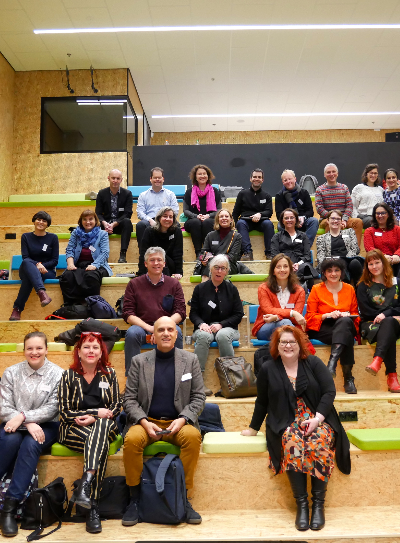
Group photo EUFACTCHECK 240119

The EUFACTCHECK project

EUFACTCHECK is the fact-checking project of the European Journalism Training Association (EJTA) that intends to build a sustainable curriculum unit on fact-checking within a European network of Journalism schools.

Through fact-checking European political claims and trying to tackle misinformation, we want our students and our public to grow a deeper insight and interest in democratic processes, both on national and European level.

EUFACTCHECK wishes to motivate fact-based debate in the EU and to stimulate media and information literacy.

Our history

After the success of the students’ publications, the participants of EJTA’s fact-checking project EUFACTCHECK decided at the EJTA AGM in Paris (July 2019) to move on with the project and to take new steps in the academic year 2019-2020.

By January-February 2019 a manual with guidelines and tips & tricks was published. In February 2020 a second Bootcamp will be organised in Ljubljana, with financial help from the Evens Foundation. This Train the Trainer focused on Central Eastern European countries, some new schools joined this project.
During corona the EJTA-schools continued to verify claims and publish fact checks. Now we are looking ahead to the 2024 EU elections.

For information about the EUfactcheck project please contact the programme manager: carien.touwen@hu.nl 

Read more