EUfactcheck in 2024-2025

In May 2024 the EUfactcheck programme successfully factchecked the EU elections for the second time.  From academic year 2024-205 onwards the EUfactcheck programme will offer two different ‘tracks’ for EJTA member schools to participate.
* Individual schools can still use the EUfactcheck website as a platform to publish their students’ factchecks. This can be done at any convenient moment throughout the year, that fits the curriculum of the study programme. Please contact the EUfactcheck editorial team.
* Each year another EJTA member school will organise an intensive factchecking week, the EUfactcheck Lab, funded by Erasmus short mobility. Other EJTA member schools are welcome to join with up to 6 students and one teacher (Erasmus Blended Intensive Programme). Please contact the EUfactcheck programme manager for more details. In 2024 the EUfactcheck Lab covered the EU elections, in 2025 the topic is ‘Climate Reporting’.

EUfactcheck, an initiative of the European Journalism Training Association (EJTA) fights mis- and disinformation about European policies and topics. Journalism students from all over Europe factcheck claims and statements made by politicians and others and rate them. Our focus is not to debunk fake news but to give correct information to the reader.

Latest fact-checks

mostly false

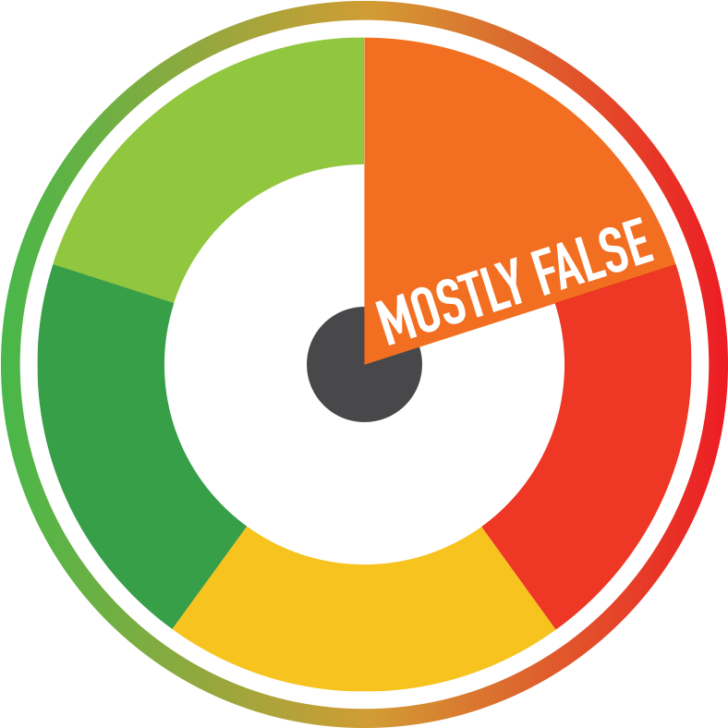
Mostly false: Germany faces the highest energy costs worldwide, which is making its economy noncompetitive

On November 7, 2024, Alice Weidel, co-chair of the party AfD, stated in a ZDF television interview that Germany has the highest energy costs worldwide, which she claimed was making its economy noncompetitive. This claim turns out to be mostly false. The interview took place after the German government coalition breakdown. Weidel used this claim to advocate…

Read more

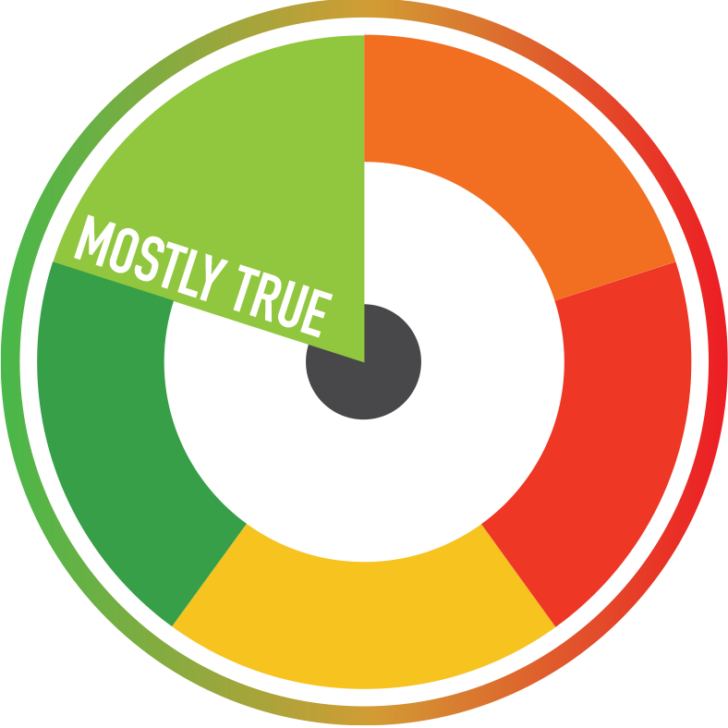
Mostly True: “Of the men who arrived in Germany in 2015/16, 86 percent are now working”

“Of the men who arrived in Germany in 2015/16, 86 percent are now working. That’s more than the average number of men who were born in Germany, which is only 81 percent.” This statement was said by Lea Reisner, candidate of the party “Die Linke”, on May 22 2024 in the MDR talk show Fakt ist! However,…

Read more
mostly false

Mostly false: Permanent border controls are “a necessity” in order to “limit irregular migration to Germany”.

On July 12, 2024, the now former FDP Secretary General Bijan Djir-Sarai urged an extension of the border controls that were carried out in Germany during the European Championships in an interview with SPIEGEL. He justified this to SPIEGEL by saying that permanent controls were “a necessity” in order to “limit irregular migration to Germany”.…

Read more

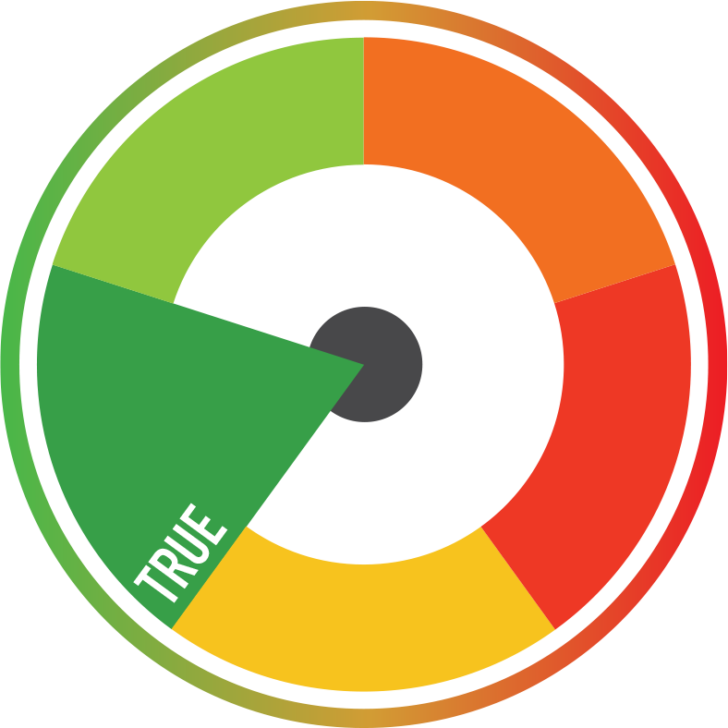
True: “Germany’s defense expenditures have increased from 34 to 90 billion euros in ten years”

On October 9, 2024, a TV debate aired on the German news channel “Welt” featuring Alice Weidel and Sahra Wagenknecht. During the debate, Ms. Wagenknecht claimed that Germany’s defense expenditures had risen from 34 billion euros in 2014 to 90 billion euros in 2024. This statement is true. The two politicians represent two highly controversial parties. Alice Weidel…

Read more

Mostly True: “Almost 80% of working women (in Germany) cannot provide for themselves and a child in the long term”

On March 03, 2023, the German politician Heidi Reichinnek from the Left Party posted a TikTok claiming, that 80% of working women cannot provide for themselves and a child in the long term. This claim turns out to be mostly true. Reichinneks TikTok contains an excerpt from her speech to the Bundestag, in which she addresses the…

Read more

True: “Number of asylum applications declined notably in February”

On March 7, 2024 the German news program “Tagesschau” released an article about the current number of asylum applications, revealing a notable decline in first-time applications for asylum in February. This claim is true. The article states that the number of first-time applications for asylum have decreased in comparison to last year. There were 19.494…

Read more
mostly false

Mostly false: “The euro was supposed to be as stable as the D-Mark, but it is as stable as the Turkish lira”

On May 3, 2024, German right-wing populist politician Maximilian Krah, who was the AfD’s lead candidate for the 2024 European elections, claimed on Tiktok that the European Central Bank was destroying people’s savings and that, although it was promised that the euro would be as stable as the German Mark, it was as stable as…

Read more

True: “Construction is responsible for producing 35% of all waste in the EU.”

On April 10, 2024, the Belgian political party ‘Groen’ published an article on their website claiming that 35% of all waste in the European Union originates from the construction sector. The claim turns out to be true. The party published this article following the passage of a new law in the European Parliament. According to…

Read more
mostly false

Mostly False: “The party AfD stands for prosperity, for family, for people, and for peace”

Maximilian Krah used to be the AfD’s lead candidate for the European elections on June 9th. He initially was elected a year ago at an AfD party conference in Magdeburg. There, he gave “Die Welt” an interview in which he said, “There is a German party that stands for prosperity, for family, for people, and…

Read more

Mostly true: “180,000 tonnes of plastic pellets lost into the European environment yearly”

They are small, but far from harmless when they end up in the environment. Member of the European Parliament Grace O’Sullivan (The Greens/ EFA) said that 180,000 tonnes of the granules used to produce plastic products get lost in the value chain, harming the biosphere. EUfactcheck discovered that a rather high estimate was chosen from…

Read more

Latest blog posts

Media Analysis: Croatia – a guardian of EU borders or a ruthless violator of human rights?

Introduction and context In a recent factcheck article, our colleagues from the Media University Stuttgart checked the claim of Mr. Nikola Milina, the head of Croatian police, who said that the violent pushbacks at the Croatian-Bosnian border published in October 2021 were an “individual event” and that he didn’t want such incident to “affect the…

Read more

The intra-European competition for vaccination progress

An urgent and almost pressing undertone is given by articles such as “The EU countries in comparison: Who vaccinates faster against Covid-19?” by Euronews or “Covid vaccinations – Which country is on the top?” by ZDF which are issued to the broad German-speaking population. It brings up the question: Is this constant comparison of European…

Read more

Media Analysis: What media tell us about depression in children and adolescents

We examined three news portals that provide information on whether children and adolescents had more hospitalizations before and during the Corona pandemic. The articles always refer to the same primary source, the german Federal Statistical Office. Now let’s look at how different journalists and online media deal with the topic. A lack of scientific quality…

Read more

Blog: Is Germany a beneficiary of the KOREU free trade agreement?

In the Factcheck, we found out that one third of EU exports to South Korea are made in Germany. But what does the agreement between the EU and South Korea really mean for both sides? Who gains, who loses? An assessment by renowned experts. Free Trade versus Protectionism Free trade is the exchange of services and…

Read more
European Journalism Training Association EJTA
Council of Europe
evens foundation
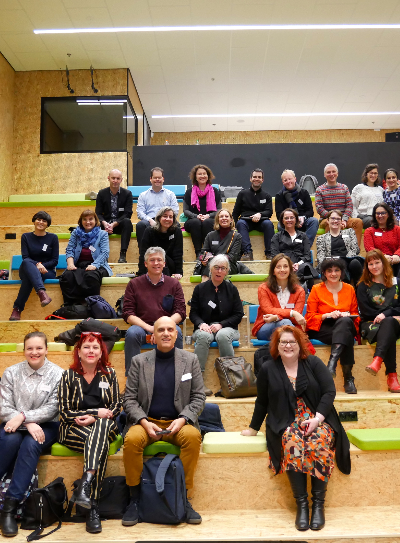
Group photo EUFACTCHECK 240119

The EUFACTCHECK project

EUFACTCHECK is the fact-checking project of the European Journalism Training Association (EJTA) that intends to build a sustainable curriculum unit on fact-checking within a European network of Journalism schools.

Through fact-checking European political claims and trying to tackle misinformation, we want our students and our public to grow a deeper insight and interest in democratic processes, both on national and European level.

EUFACTCHECK wishes to motivate fact-based debate in the EU and to stimulate media and information literacy.

Our history

After the success of the students’ publications, the participants of EJTA’s fact-checking project EUFACTCHECK decided at the EJTA AGM in Paris (July 2019) to move on with the project and to take new steps in the academic year 2019-2020.

By January-February 2019 a manual with guidelines and tips & tricks was published. In February 2020 a second Bootcamp will be organised in Ljubljana, with financial help from the Evens Foundation. This Train the Trainer focused on Central Eastern European countries, some new schools joined this project.
During corona the EJTA-schools continued to verify claims and publish fact checks. Now we are looking ahead to the 2024 EU elections.

For information about the EUfactcheck project please contact the programme manager: carien.touwen@hu.nl 

Read more