EUfactcheck 2.0

In May 2024 the EUfactcheck programme successfully factchecked the EU elections for the second time. From academic year 2024-205 onwards the EUfactcheck programme will offer two different ‘tracks’ for EJTA member schools to participate.
* Individual schools can still use the EUfactcheck website as a platform to publish their students’ factchecks. This can be done at any convenient moment throughout the year, that fits the curriculum of the study programme. Please contact the EUfactcheck editorial team.
* Each year another EJTA member school will organise an intensive factchecking week, the EUfactcheck Lab, funded by Erasmus short mobility. Other EJTA member schools are welcome to join with up to 6 students and one teacher (Erasmus Blended Intensive Programme). Please contact the EUfactcheck programme manager for more details. In 2024 the EUfactcheck Lab covered the EU elections, hosted by EJTA member Hogeschool Utrecht, the Netherlands. The next year EJTA member Universitat Autonoma Barcelona in Spain offered the EUfactcheck Lab on ‘Climate Change’. In 2026 the topic is Press Freedom. In the first week of May students from 7 EJTA schools meet at Jade University in Wilhelmshaven.

EUfactcheck, an initiative of the European Journalism Training Association (EJTA) fights mis- and disinformation about policies and topics in Europe. Journalism students from all over Europe factcheck claims and statements made by politicians and others public figures, and rate them as true or false. Our focus is to give correct information and context to the reader.

Latest fact-checks

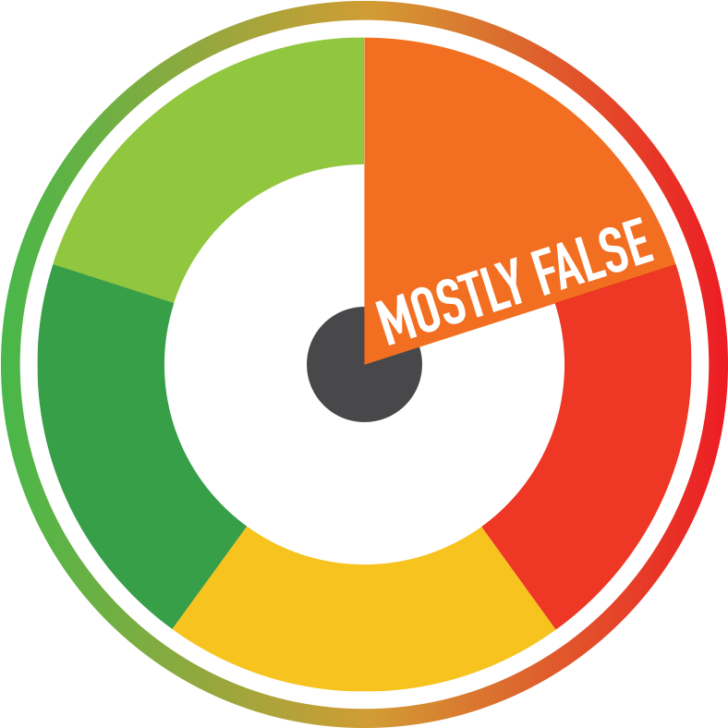
MOSTLY FALSE: „20% of the companies covered by the CBAM are responsible for 97% of the emissions”

During a public hearing at the European Parliament’s Subcommittee on Tax Matters (FISC) on 6 February 2025, Dutch Commissioner for Climate Action Wopke Hoekstra claimed that only 20% of companies are responsible for around 97% of the emissions. His claim turns out to be mostly false. Public hearing at the Committee on Tax Matters (FISC)…

Read more
mostly false

Mostly False: “Dual citizenship will become the rule in our citizenship law”

On January 8, 2025, Friedrich Merz, the Federal Chancellor of Germany, stated in an interview with the newspaper Welt that “Dual citizenship will thus become the rule in our citizenship law” and that “it will bring additional problems into the country.” To assess this statement, we first examine whether dual citizenship has indeed become the…

Read more
mostly false

Mostly false: “Immigration costs Germany €6 trillion”

On January 11, 2024, the German extreme-right party „Alternative for Germany“ published an article in its digital member magazine afdkompakt.de claiming that immigration costs Germany €6 trillion, which is seen as evidence for the need of remigration. The source for this statement is a study published in January by economist Bernd Raffelhüschen. The AfD’s interpretation…

Read more

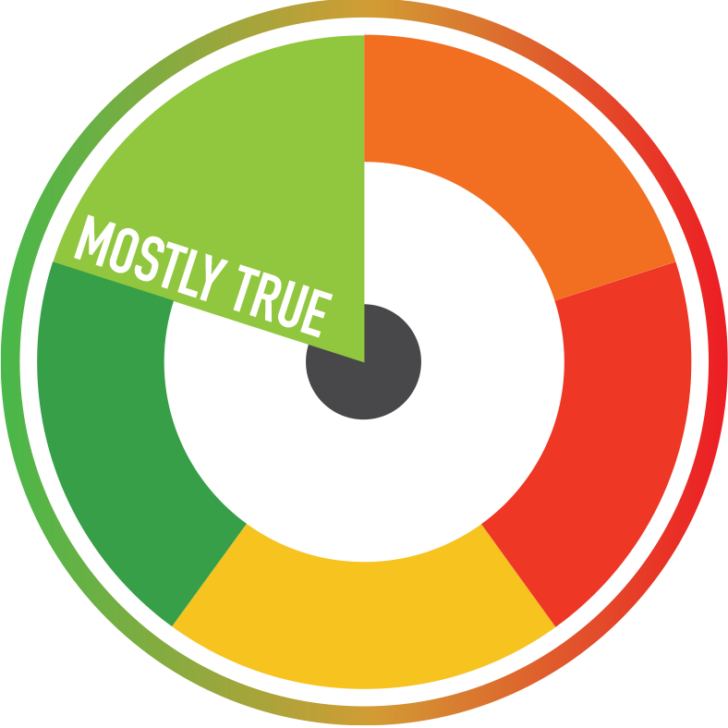
Mostly True, but misleading: “Many Member States are looking for innovative strategies to prevent irregular migration”

In a letter dated June 25, 2024, European Commission President Ursula von der Leyen claimed: “Many Member States are looking at innovative strategies to prevent irregular migration by tackling asylum applications further from the EU’s external borders.” However, a closer examination shows that very few countries are actively pursuing such plans and concrete results are…

Read more
mostly false

Mostly false: “Nuclear energy is CO₂-neutral”

During an appearance on the German political talkshow „Farbe bekennen“, AfD-chairwoman Alice Weidel states that nuclear energy is CO₂-neutral (08:33). This claim relies on the fact that the actual process of nuclear energy production does not cause any carbon emissions. However, regarding the entire lifespan of a nuclear energy plant and the carbon emissions that are…

Read more

Latest blog posts

Blog: Self-Test – Fact-Check on Climate Change: A Mission Impossible?

The world is increasingly plagued by extreme weather events like heatwaves and floods. But how can we be sure that the information we receive about these events is truly accurate? In an era where misinformation and fake news are widespread on social media, the question arises: Can an ordinary citizen distinguish reliable facts from false…

Read more

Blog: Electromobility – A comparison between Scandinavia and Germany

Electromobility is at the heart of the debate on sustainable transportation, bringing with it a range of opportunities, challenges, and open questions. While some view it as a key lever in combating climate change, others question its actual sustainability. Electromobility plays a central role in European climate and transport policy and is seen as an…

Read more

Blog: Housing cost crisis in Europe: Why housing is becoming unaffordable for many

“Without the many shifts in a café in Germany, I would never have been able to afford my Erasmus semester here”. Lisa Obst, Erasmus student in Barcelona, explains what many young people in Europe are currently experiencing: Housing is becoming a luxury good. And hers is not an isolated case. Rising rents are not just…

Read more

Blog: Fact-checking Tesla: How do you report on a company that won’t talk to you?

On February 9, 2025, the pro-European news platform Other Europe posted on social media platform X that Tesla sales in the European Union had declined by 63%. This was accompanied with claims of an European boycott. But is it true? And how can we fact-check a global tech giant that doesn’t answer questions? Our first…

Read more

Blog: Fact-checking contradictory numbers – between confusion and (misleading) correction

Verifying numerical data is a significant challenge for many people. It requires time and effort, which are often in short supply in everyday life. Especially in areas that are outside one’s personal expertise, there is a tendency to trust the accuracy of media reports – often without questioning whether a so-called fact-check is actually correct.…

Read more

Transidentity: clearing up common myths to promote acceptance and equality

Germany’s Self-Determination Act is an example for the increase in visibility and discussion surrounding transgender identity within the EU. However, discrimination against transgender individuals persists, highlighting the ongoing need for greater acceptance and equality. To address misconceptions surrounding trans identity, we explore common myths with insights from experts and those directly affected. The topic Transidentity…

Read more

Blog: Global warming affects both: Nature and human beings

Experts warn of the consequences of rising seas due to climate change. Our reporter Lennart Platz travelled to a place where future generations will soon be getting their feet wet – the Wadden Sea World Heritage. RESEARCH | ARTICLE – Lennart Platz and Moritz Orth, Jade University of Applied Sciences, Germany Leave your comments, thoughts,…

Read more

Blog: Looking Behind the Headlines – Media Ethics and Seniors’ Driving Ability

In today’s fast-paced media landscape, discussions about older people’s ability to drive often drift into tricky territory, rife with stereotypes and prejudice. But is there more to the stereotypes than meets the eye? In this blog post, we have a closer look at how senior citizens are portrayed in the media and what responsibility the…

Read more

Blog: Navigating Press Freedom Challenges in Overwhelmed Health Systems

“You’re not from the FAZ or another major media outlet.” This incidental comment during our research for our factcheck on the rise in cholera numbers resonates in our minds and illustrates a bitter reality: journalists outside of large editorial offices are fighting against invisibility and a lack of respect. Our research work during the factcheck,…

Read more
European Journalism Training Association EJTA
Council of Europe
evens foundation
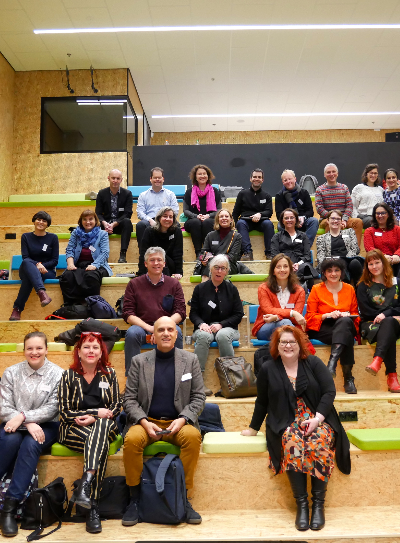
Group photo EUFACTCHECK 240119

The EUFACTCHECK project

EUFACTCHECK is the fact-checking project of the European Journalism Training Association (EJTA) that intends to build a sustainable curriculum unit on fact-checking within a European network of Journalism schools.

Through fact-checking European political claims and trying to tackle misinformation, we want our students and our public to grow a deeper insight and interest in democratic processes, both on national and European level.

EUFACTCHECK wishes to motivate fact-based debate in the EU and to stimulate media and information literacy.

Our history

After the success of the students’ publications, the participants of EJTA’s fact-checking project EUFACTCHECK decided at the EJTA AGM in Paris (July 2019) to move on with the project and to take new steps in the academic year 2019-2020.

By January-February 2019 a manual with guidelines and tips & tricks was published. In February 2020 a second Bootcamp will be organised in Ljubljana, with financial help from the Evens Foundation. This Train the Trainer focused on Central Eastern European countries, some new schools joined this project.
During corona the EJTA-schools continued to verify claims and publish fact checks. Now we are looking ahead to the 2024 EU elections.

For information about the EUfactcheck project please contact the programme manager: carien.touwen@hu.nl 

Read more