EUfactcheck in 2024-2025

In May 2024 the EUfactcheck programme successfully factchecked the EU elections for the second time.  From academic year 2024-205 onwards the EUfactcheck programme will offer two different ‘tracks’ for EJTA member schools to participate.
* Individual schools can still use the EUfactcheck website as a platform to publish their students’ factchecks. This can be done at any convenient moment throughout the year, that fits the curriculum of the study programme. Please contact the EUfactcheck editorial team.
* Each year another EJTA member school will organise an intensive factchecking week, the EUfactcheck Lab, funded by Erasmus short mobility. Other EJTA member schools are welcome to join with up to 6 students and one teacher (Erasmus Blended Intensive Programme). Please contact the EUfactcheck programme manager for more details. In 2024 the EUfactcheck Lab covered the EU elections, in 2025 the topic is ‘Climate Reporting’.

EUfactcheck, an initiative of the European Journalism Training Association (EJTA) fights mis- and disinformation about European policies and topics. Journalism students from all over Europe factcheck claims and statements made by politicians and others and rate them. Our focus is not to debunk fake news but to give correct information to the reader.

Latest fact-checks

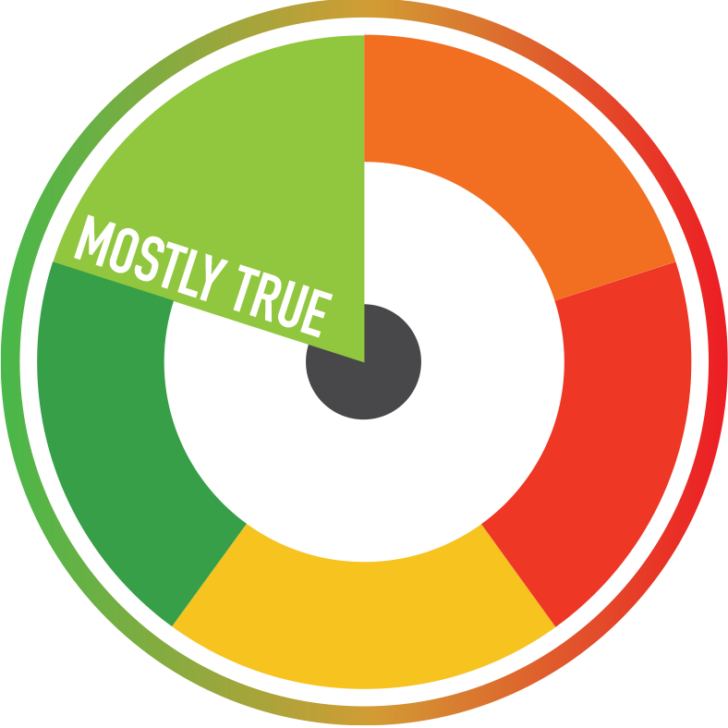
Mostly true: “More hospitalizations of children with depression”

On March 30, 2021, ZEIT online claimed More hospitalizations of children with depression. Already before Covid 19 the number of young patients with depression increased by 24 percent in 2019. This claim turns out to be mostly true. The article addresses the issue of depression in children and adolescents. The author says that even before…

Read more

Uncheckable: “Belgium is the country that gives the largest amount of money to polluting diesel”

On 2 October 2021, Conner Rousseau (Vooruit) said in an interview that Belgium is the country that gives the largest amount of money to polluting diesel. Is this statement true? And maybe even more important: how and why does Belgium spend money on this fuel? After doing research and interviewing experts we can say that…

Read more

Mostly true: “In September, wind energy only produced 2% of the energy needs”

On 5 October 2021, British broadcaster and former politician Nigel Farage made a statement about wind energy in September 2021. During the show “FOX Business” on the broadcaster FOX he said that “in September wind energy only produced 2% of the energy needs”. This statement is mostly true. Nigel Farage is a British broadcaster and…

Read more

True: „One third of EU exports to South Korea are made in Germany“

The lobby organization Initiative for Social Market Economy (INSM) published nine facts about the EU on their website. One of them is “One third of EU exports to South Korea are made in Germany”, which seemed to be true.  The INSM is financed by employers’ associations and, according to its own statement, acts independently of political parties. As…

Read more

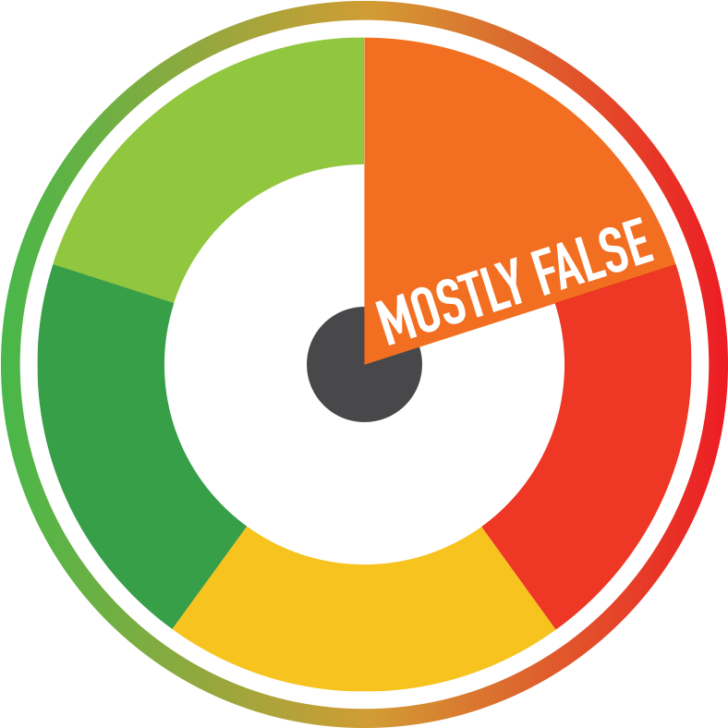
Mostly False: “OSCE sent way less observers to german elections in 2021 than in 2017”

Russia Today DE claims that there have been only four OSCE-observers at the German Bundestag elections this year, whereas there have been 59 at the 2017 elections. Though the numbers were not incorrect, RT DE left out crucial information about how they were formed, drastically changing the bottom line and possible interpretations of the claim.…

Read more

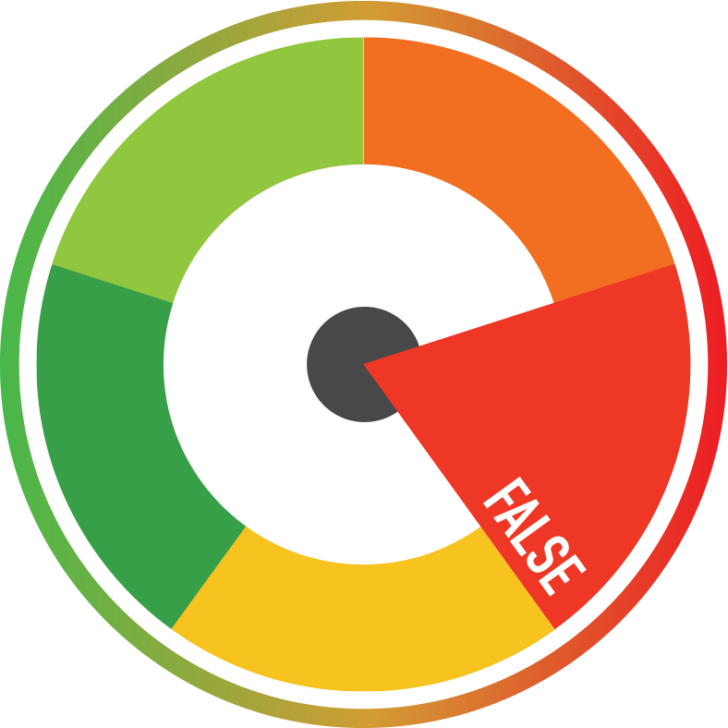
False: “The government doesn’t lose money because of tax evasion. She compensates through higher tax assessments on others”

The Pandora Papers have revealed tax evasion from around the world. Peter De Roover, a Belgian politician, tweeted on October 7th: “The government doesn’t lose money because of tax evasion. She simply compensates through higher tax assessments on others. In fraud, the good taxpayer is the victim, not the government.” His claim is false. “RESEARCH…

Read more

Mostly True: “In 2020, Germany contributed almost 20 billion Euros to the EU”

On August 8th 2021, Alice Weidel, member of the German parliament and part of a right-winged populist political party, tweeted about Germany’s contributions to the European Union. She stated that the overall payments added up to almost 20 billion Euros, twice as much as France has paid. The claim turns out to be mostly true. According…

Read more

Mostly True: “Austria spends over one billion euros on development cooperation and humanitarian aid, the value has increased tenfold”

On 6th of September 2021, the former chancellor of Austria Sebastian Kurz made a statement during an interview with the Austrian TV-Channel ORF where he outlined that Austria is spending over one billion euros on development cooperation and humanitarian aid. He also said that since he is in charge the money Austria spends in this…

Read more

Latest blog posts

Blog: The curious and complex relationship between European and national legislation

When we started searching for second topic, we realized that statements of Croatian politicians are mostly based on predictions and promises. Fortunately, the political parties started to present their programmes and lists of candidates for the upcoming European elections. The candidates started to appear more in the media and the current Croatian MEP Biljana Borzan’s…

Read more

Blog: Polarisation in democracy: good or bad? Depends on how you look at it

In a tweet from March 7, member of the European Parliament Gerolf Annemans (ECR) claimed that “Polarisation is democratic. Politically correct and dull ‘standardised thinking’ isn’t.” The concept ‘polarisation’ indicates moving towards ‘the extremes’ of a certain ideology and implies that there is no such thing as a political centre. We lined up the views…

Read more

Blog: Why accurate salary comparisons between government officials are nearly impossible

Salaries of government officials are always under scrutiny. The payment of EU officials is no exception. ‘Top EU civil servants to pocket salaries over €20,000 a month for the first time’, reads a Telegraph headline from last December. ‘10,000 European Union officials better paid than David Cameron’, wrote the same paper back in 2014. ‘Over…

Read more
European Journalism Training Association EJTA
Council of Europe
evens foundation
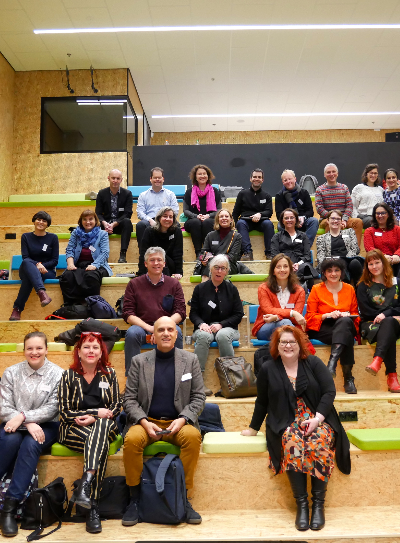
Group photo EUFACTCHECK 240119

The EUFACTCHECK project

EUFACTCHECK is the fact-checking project of the European Journalism Training Association (EJTA) that intends to build a sustainable curriculum unit on fact-checking within a European network of Journalism schools.

Through fact-checking European political claims and trying to tackle misinformation, we want our students and our public to grow a deeper insight and interest in democratic processes, both on national and European level.

EUFACTCHECK wishes to motivate fact-based debate in the EU and to stimulate media and information literacy.

Our history

After the success of the students’ publications, the participants of EJTA’s fact-checking project EUFACTCHECK decided at the EJTA AGM in Paris (July 2019) to move on with the project and to take new steps in the academic year 2019-2020.

By January-February 2019 a manual with guidelines and tips & tricks was published. In February 2020 a second Bootcamp will be organised in Ljubljana, with financial help from the Evens Foundation. This Train the Trainer focused on Central Eastern European countries, some new schools joined this project.
During corona the EJTA-schools continued to verify claims and publish fact checks. Now we are looking ahead to the 2024 EU elections.

For information about the EUfactcheck project please contact the programme manager: carien.touwen@hu.nl 

Read more